

What probate does
Probate is the court-supervised process for validating a will, identifying assets, paying valid debts and taxes, and distributing property.
The process starts with a petition
Probate is not automatic when someone dies. An interested person must petition the court before the court-supervised process begins.
The individual title problem
Probate is commonly the legal path for taking a deceased person’s name off an individually owned title. A trust, survivorship arrangement, or beneficiary transfer may change the path for a particular asset.
What probate can cost and how long it can take
The time and expense vary with the estate, the court, the family, and the condition of the records.
A useful estimate, not a promise
Common cost estimates run roughly 3–8% of an estate’s gross value. In some places, the calculation is based on gross value before a mortgage is subtracted, and the percentage is not a Rhode Island fee schedule or a quote for a particular estate.
Assets can be tied up
Probate often runs many months to a couple of years or longer. During that time, accounts or property may be difficult to access while notices, appraisals, claims, tax questions, and court approvals are handled.
Why probate is public
A will filed for probate generally becomes part of a court record.
What can be exposed
- Heirs and beneficiaries may be identified.
- Asset amounts and property addresses may appear in filings.
- A business owner’s ownership or financial information may become easier to find.
- Public details can invite solicitations during a vulnerable time.
A private alternative
Trust administration is generally private, although deeds, tax records, court filings, or a dispute can still create public information. A living trust only helps with the assets actually transferred to it.
Probate and incapacity are different problems
A will has no legal effect while you are alive.
If you cannot manage your affairs
Someone may need to petition a court for a conservatorship or guardianship, depending on the legal setting. The process can involve public proceedings, court-approved expenses, detailed records, bonds, and fees, and you may not choose the person appointed.
One process does not replace the other
A conservatorship or guardianship during life does not eliminate probate at death. A trust and carefully coordinated powers of attorney can address both parts of the planning problem.
Planning before a loss
A properly funded revocable living trust can keep trust assets out of probate and give a successor trustee instructions for incapacity.
The backstop still matters
A pour-over will can catch assets left outside the trust and can nominate a guardian for minor children. Those assets may still pass through probate first, so funding and beneficiary reviews remain essential.
When a loved one has died, we help executors and heirs understand the process, deadlines, title work, and next decision.
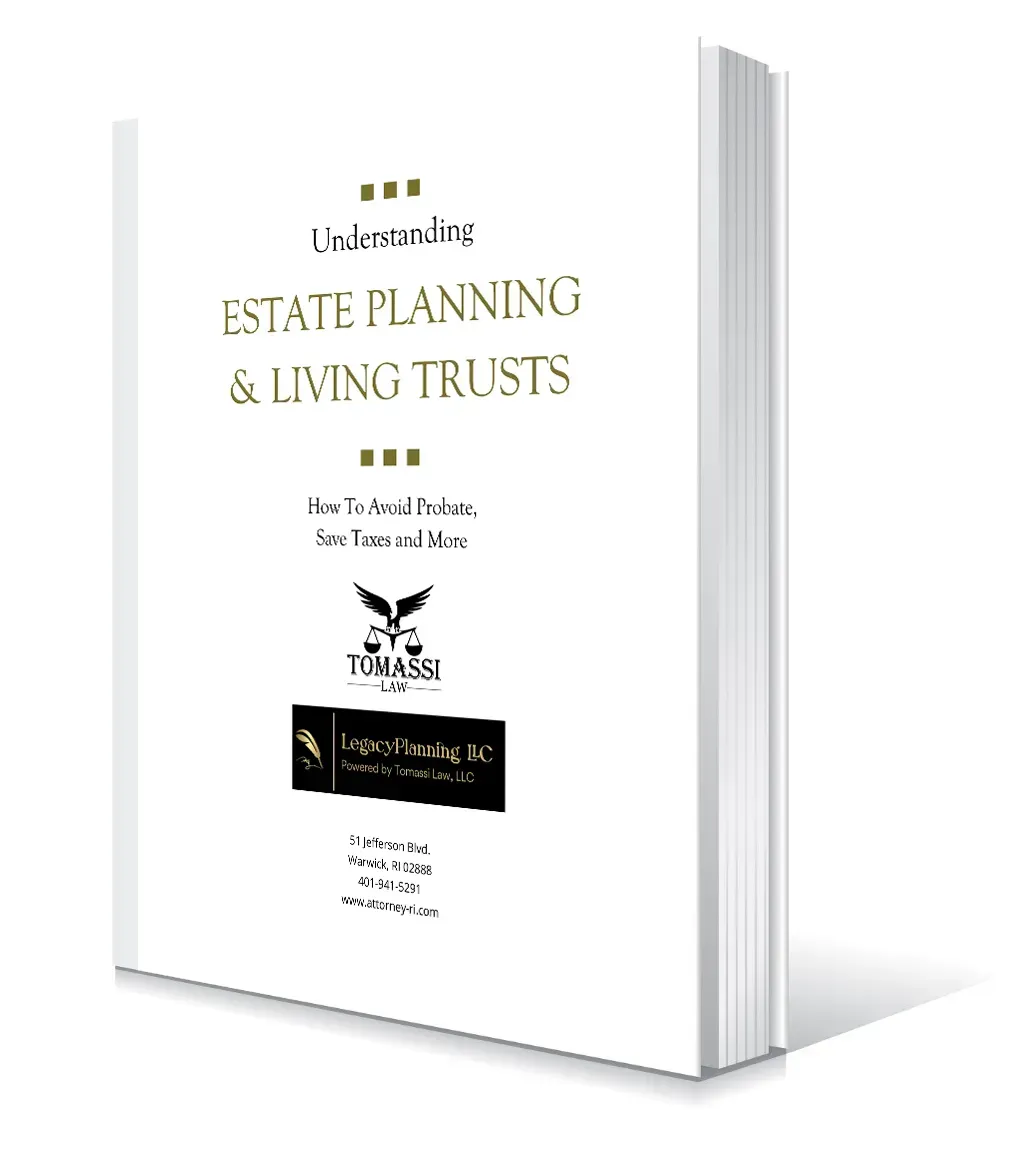
One free copy, no obligation
A plain-English guide for Rhode Island families, published by Tomassi Law, LLC.
A practical place to begin
Understanding Estate Planning & Living Trusts
How To Avoid Probate, Save Taxes and More
This free booklet explains, in plain English, how estate planning works, how living trusts can help families avoid probate, and how thoughtful planning can help protect assets. It is general information for Rhode Island families—not legal advice—and it does not create an attorney-client relationship.
Read more about living trusts, probate, and estate administration, or contact the firm with a question about your own situation.
Requests are handled by the office Monday–Friday, 9:00am – 5:00pm; Saturdays by appointment only. You can also call 401-941-5291.
Your information is used only to send the booklet.