
Start with the result you want
A will and trust package should connect the people, property, health care choices, and tax questions that make your family different.
Not only for large estates
A modest estate can still include a home, retirement accounts, minor children, a family business, or a person who may need help managing an inheritance. Estate planning is about control and care, not a wealth stereotype.
A plan you can understand
We ask what you want to happen, explain the choices in plain English, and build the documents around your actual goals. You should understand the plan before you sign it.
What the package can address
The right documents depend on your family and how your assets are owned.
Core documents
- A will can state instructions for property left in your individual name.
- A pour-over will can catch assets left outside a living trust.
- A will can nominate a guardian for minor children.
- A revocable trust can manage funded assets during life, incapacity, and after death.
- Financial and health care powers of attorney can name people to act when you cannot.
- An advance directive can record health care wishes and identify a trusted decision-maker.
Ownership is part of the plan
A document cannot control property that passes by joint ownership or an outdated beneficiary form. Deeds, accounts, insurance, and business interests should be reviewed together.
Why a trust may belong in the package
A properly funded living trust can help keep assets out of probate and out of a public court process.
During life and incapacity
You can usually remain in control as trustee. A named successor trustee can step in under instructions if you become unable to manage your affairs, and you can resume control if you recover.
After death
Trust assets can be administered privately and can be distributed on a schedule. That may help when beneficiaries are young, financially vulnerable, or not ready for an outright inheritance.
Tax planning is circumstance-specific
Estate taxes are separate from income taxes, probate costs, and legal fees.
Married couples
Leaving everything outright to a surviving spouse may use the marital deduction but waste the first spouse’s available exemption. A two-trust arrangement can divide the first spouse’s share, use both available exemptions, and keep instructions around how that share is managed.
No outdated figures
Tax exemptions, exclusions, rates, and deadlines change. We will confirm the rules that apply to your circumstances instead of presenting a historical dollar figure as current law.
The work after signing
Execution is only one part of an effective plan.
Fund and coordinate
- Complete deeds and account ownership changes.
- Review beneficiary designations after the trust is signed.
- Keep copies and practical instructions where your successor can find them.
- Revisit the plan after major family, property, or legal changes.
The most useful estate plan is one your family can find, understand, and follow.
One free copy, no obligation
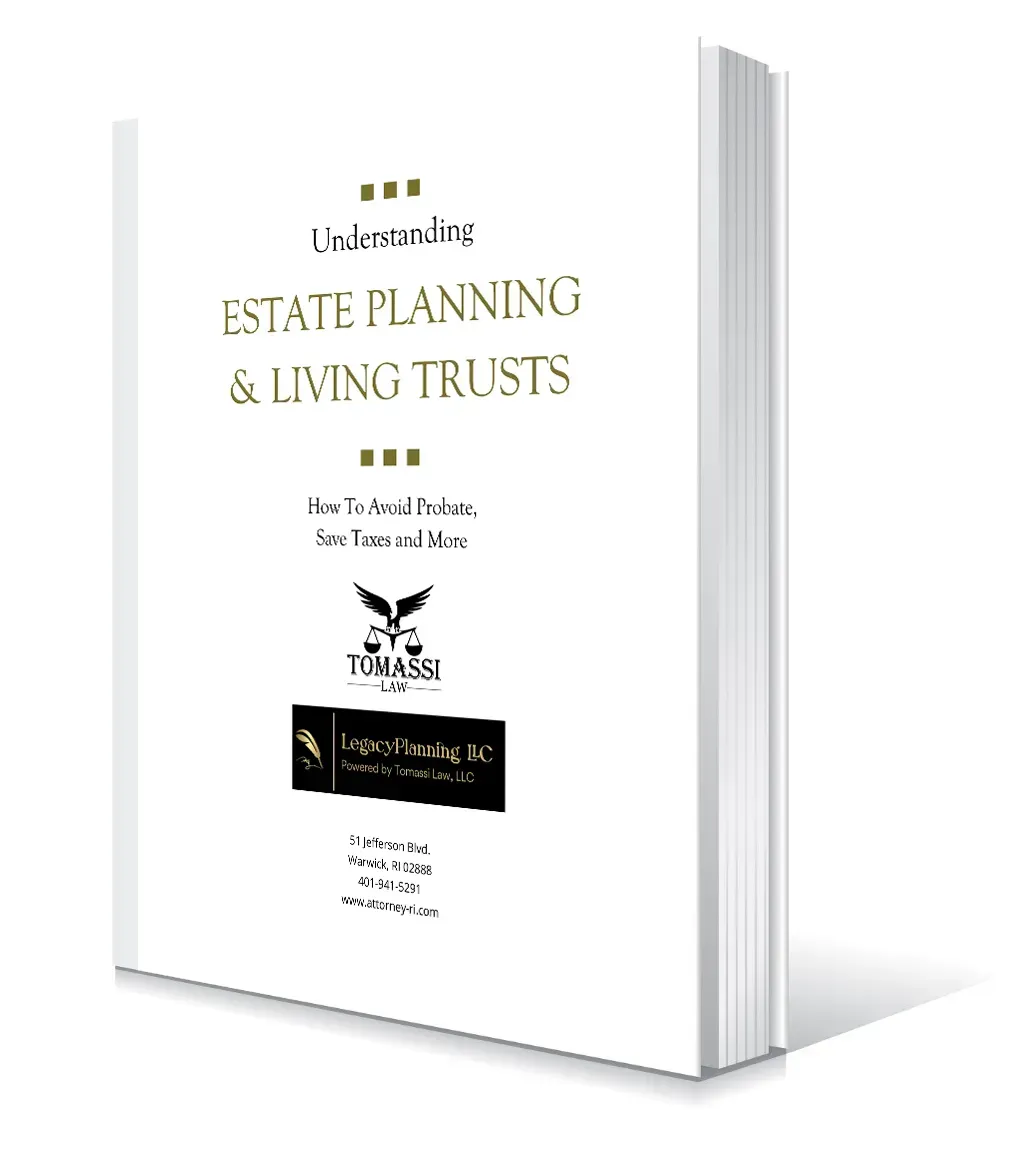
A plain-English guide for Rhode Island families, published by Tomassi Law, LLC.
A practical place to begin
Understanding Estate Planning & Living Trusts
How To Avoid Probate, Save Taxes and More
This free booklet explains, in plain English, how estate planning works, how living trusts can help families avoid probate, and how thoughtful planning can help protect assets. It is general information for Rhode Island families—not legal advice—and it does not create an attorney-client relationship.
Read more about living trusts, probate, and estate administration, or contact the firm with a question about your own situation.
Requests are handled by the office Monday–Friday, 9:00am – 5:00pm; Saturdays by appointment only. You can also call 401-941-5291.
Your information is used only to send the booklet.